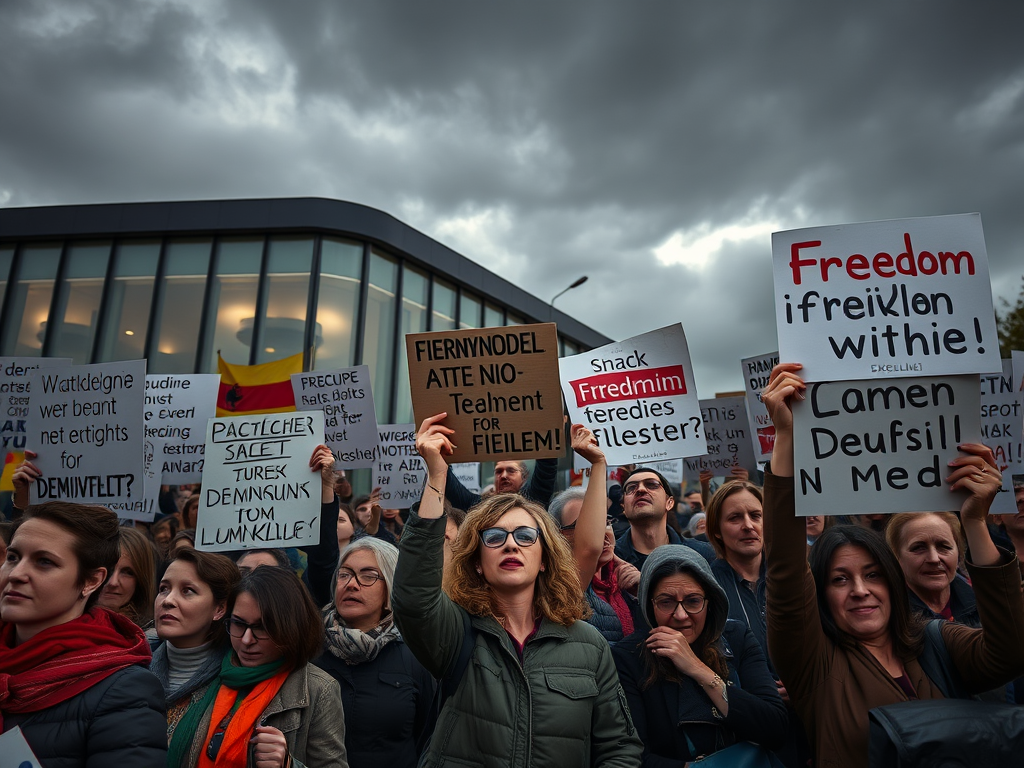
Has the recent ARD-Sommerinterview with AfD-Chefin Alice Weidel sparked chaos and protests? What does this reveal about the current political climate in Germany? The latest installment of the traditional ARD-Sommerinterviews has triggered intense reactions across Germany. Public unrest, counter-demonstrations, and critical media commentary accompanied the appearance of AfD figurehead Alice Weidel. This article explores the impact of the interview and the broader implications for political discourse in Germany.
The Interview and Its Immediate Fallout
The ARD-Sommerinterview with Alice Weidel aired on public broadcaster ARD as part of its usual series featuring leaders from all major political parties. However, Weidel’s participation, given the AfD’s increasingly controversial positions, did not go unnoticed. Even before the broadcast, numerous protests erupted outside the recording location, criticizing what demonstrators saw as the normalization of far-right rhetoric through mainstream media platforms.
During the interview, Weidel reiterated polarizing positions on asylum policy, the European Union, and climate regulations, prompting immediate backlash both online and offline. Social media channels saw a surge of hashtags critical of the AfD’s inclusion in what some considered a legitimizing format. Petition campaigns also emerged, demanding future exclusion of the party from similar public broadcasts. Yet others defended the inclusion under the principle of democratic representation and media neutrality.
This dual reaction is symptomatic of a deeper-seated polarization within the German electorate. The AfD’s increasing penetration into state parliaments—particularly in Eastern Germany—means public broadcasters are caught between impartial reporting obligations and the ethical implications of platforming extremism.
The Broader Implications for German Political Culture
The intensity of the reaction to Weidel’s interview reflects a changing political landscape in Germany. Traditional parties are losing ground in favor of polarized alternatives. The rising friction is not just ideological but touches on fundamental questions of democratic practice: Who deserves a public platform? Where does responsible journalism end and complicity begin?
Moreover, the fierceness of the protests indicates a reinvigorated civil society. Activists from pro-democratic organizations and left-leaning groups are increasingly vocal in opposing what they perceive as backsliding toward nationalist and anti-democratic tendencies. These protests are not isolated but part of a larger trend throughout Europe, where right-wing populism challenges conventional norms of public discourse and media responsibility.
For public broadcasters like ARD, this requires walking a tightrope: offering balanced coverage while facing mounting public pressure from both supporters and opponents of controversial political voices like the AfD. For politicians, it means navigating a volatile electorate that no longer aligns easily along traditional left-right lines.
Conclusion: The uproar surrounding the ARD interview with Alice Weidel exposes a Germany at a political crossroads. As protest movements and far-right support grow simultaneously, the nation grapples with how far democratic tolerance should stretch. Media, politics and civil society are all being tested—and how they respond will help shape German democracy in the years to come.
Leave a Reply